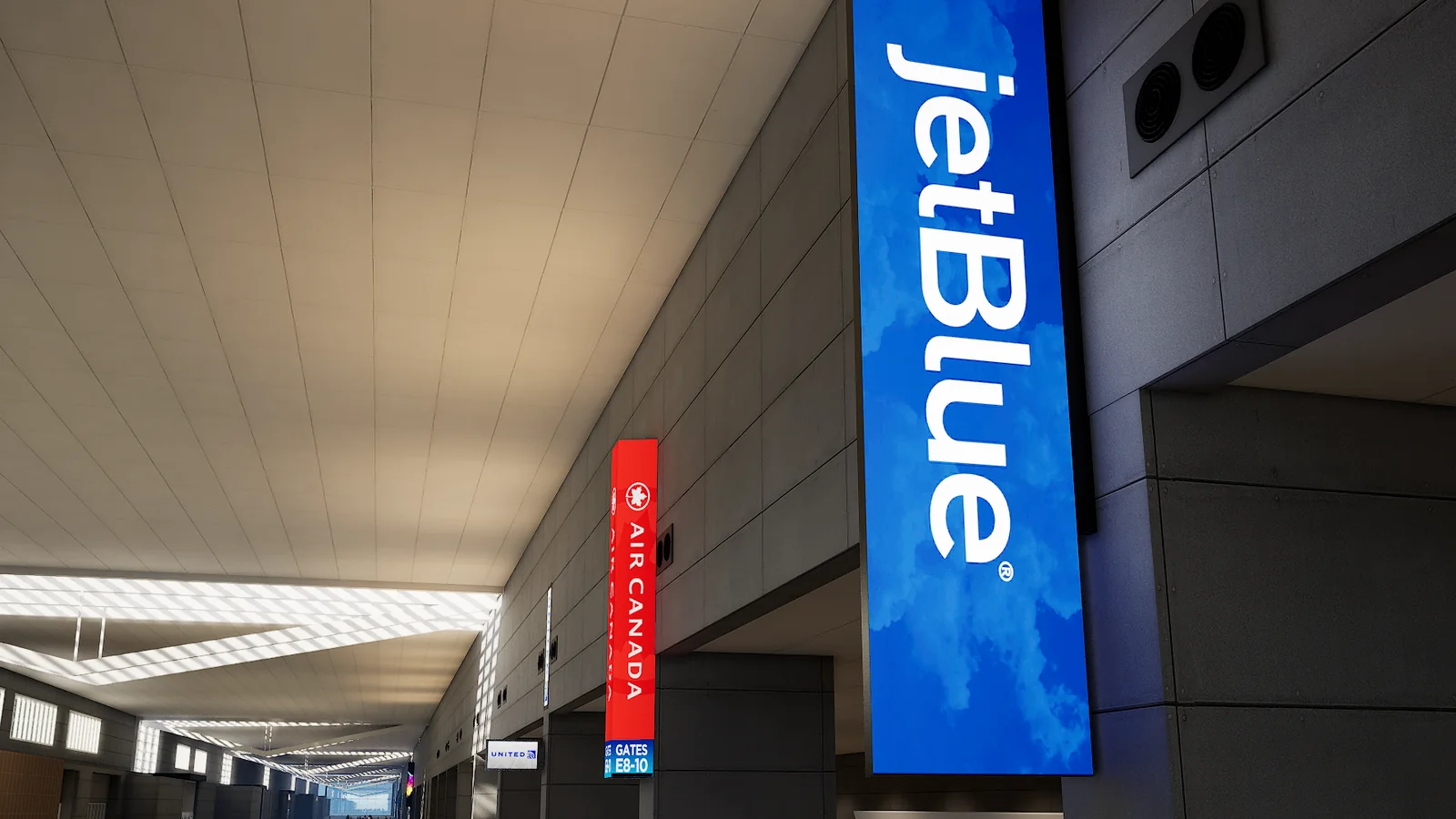
A dozen display options, evaluated before one was built
A transportation client needed to choose between custom LED configurations that didn't exist yet. We built the space in Unreal so every option could be walked, measured and compared at true scale.
- Client
- Nanolumens
- Sector
- Airports & transportation
- Capability
- LED display simulation
- Year
- 2023
Airport ticketing. Simulated identity columns above the check-in rows, seen from the concourse.
You can't spec a display from a datasheet
Pixel pitch, brightness and dimensions describe a product. They don't tell you what it feels like to stand thirty feet away in a busy concourse, or whether the content still reads from where people actually walk.
Nanolumens' customer was weighing roughly a dozen custom configurations for an airport ticketing hall: a run of double-sided LED columns carrying airline identity above the check-in rows, seen from every angle a departing passenger takes. Each option meant a different pitch, a different size and a different mounting position, and committing to the wrong one is expensive in a way that isn't easily undone.
Every option, in the real room
We built a photo-real model of the space and dropped each display configuration into it, so the choice could be made by looking rather than by inference.
Pixel pitch at true distance
How each pitch resolves from where people actually stand, not from a spec sheet's optimal viewing distance.
Sightlines & obstruction
What's visible from the concourse, the approach, the escalator, and what gets blocked.
Real passenger viewpoints
Eye-level views along the paths people actually travel, rather than idealised hero angles.
Content at scale
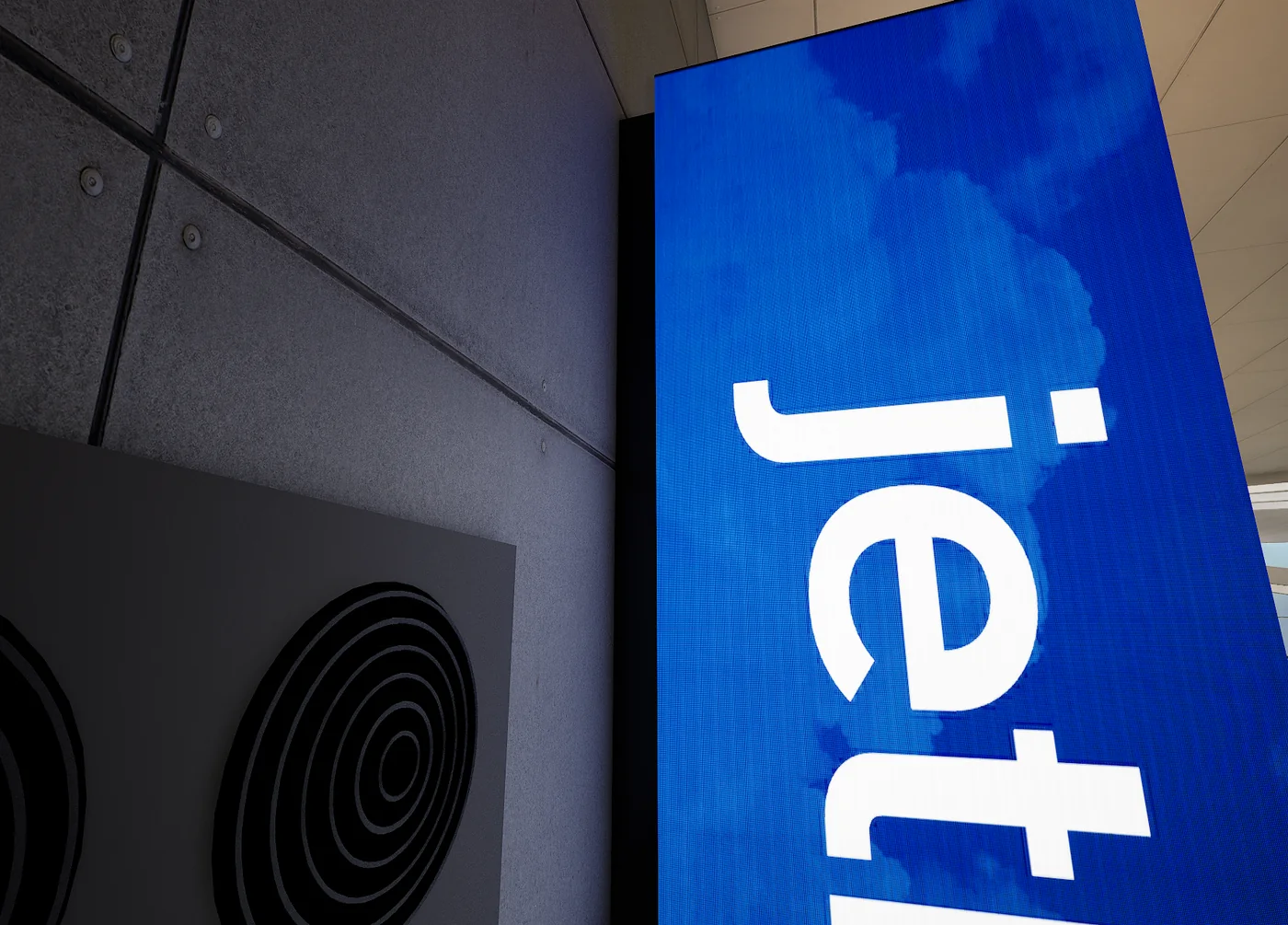
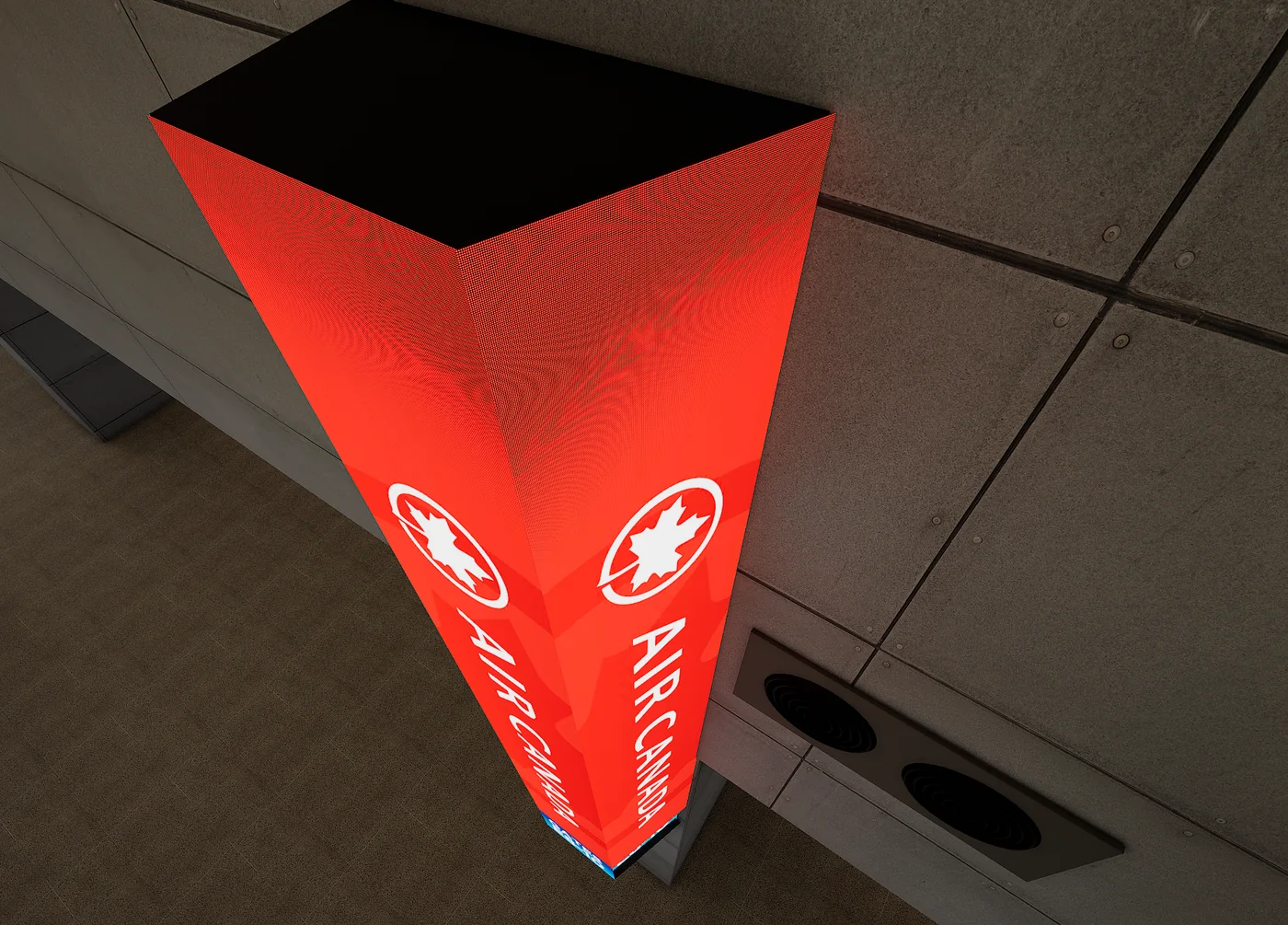
Live artwork on the surface, at the right resolution, so the client judged the real thing.
The decision got faster
Instead of reviewing options sequentially over weeks, the client's stakeholders reviewed them together in one session, flying through the space and switching configurations live.
It removed a round of meetings. Stakeholders reached consensus quickly, and they could weigh the options against each other without paying to fabricate any of them.
Judged by looking, not by spec
Every configuration was dropped into the same photo-real model of the hall, so the differences that mattered showed up at the scale and viewing distance people actually experience them.

“You can fly around the space, see things at scale, and really get a feel for how customers will interact.”
How this was built
The studio
An Atlanta crew building photo-real, real-time work in Unreal Engine.
LED display simulation
Pixel pitch, viewing distance and content legibility, tested before fabrication.
Sightlines & daylight
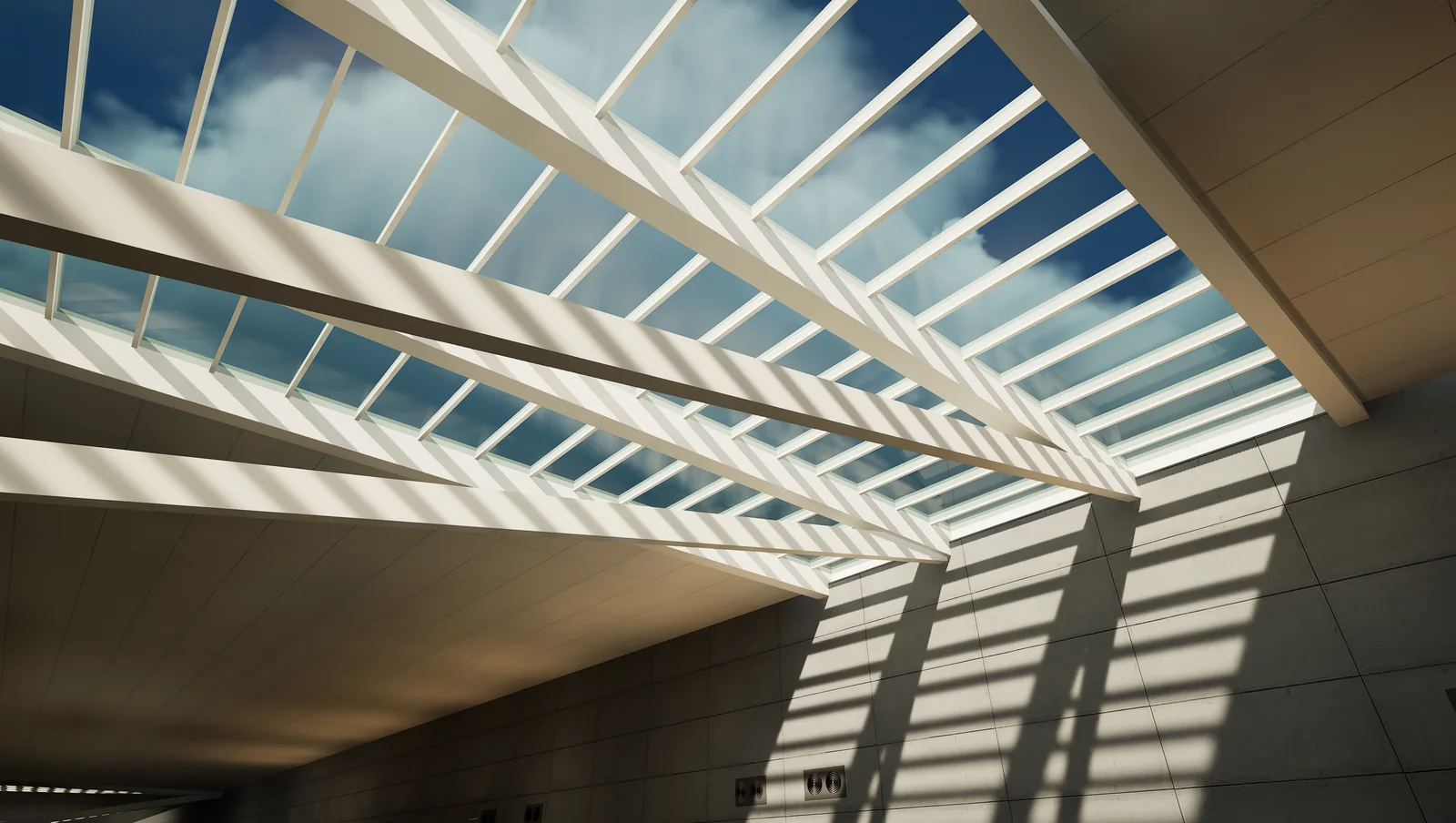
Sun-accurate lighting and sightline studies from real viewer positions.
All simulations
One model, every question: lighting, acoustics, flow and sightlines.
like this?
Free discovery call · firm fixed price · 3–4 week typical delivery